

Cliux for startups
A landing page, a waitlist form and a blog on your own domain, with Code mode for custom scripts.
A one-page template, a signup form with spam filtering and CSV export, a blog with a feed and structured data, cookie-free analytics that show where visits come from, and a code editor for your own JavaScript.
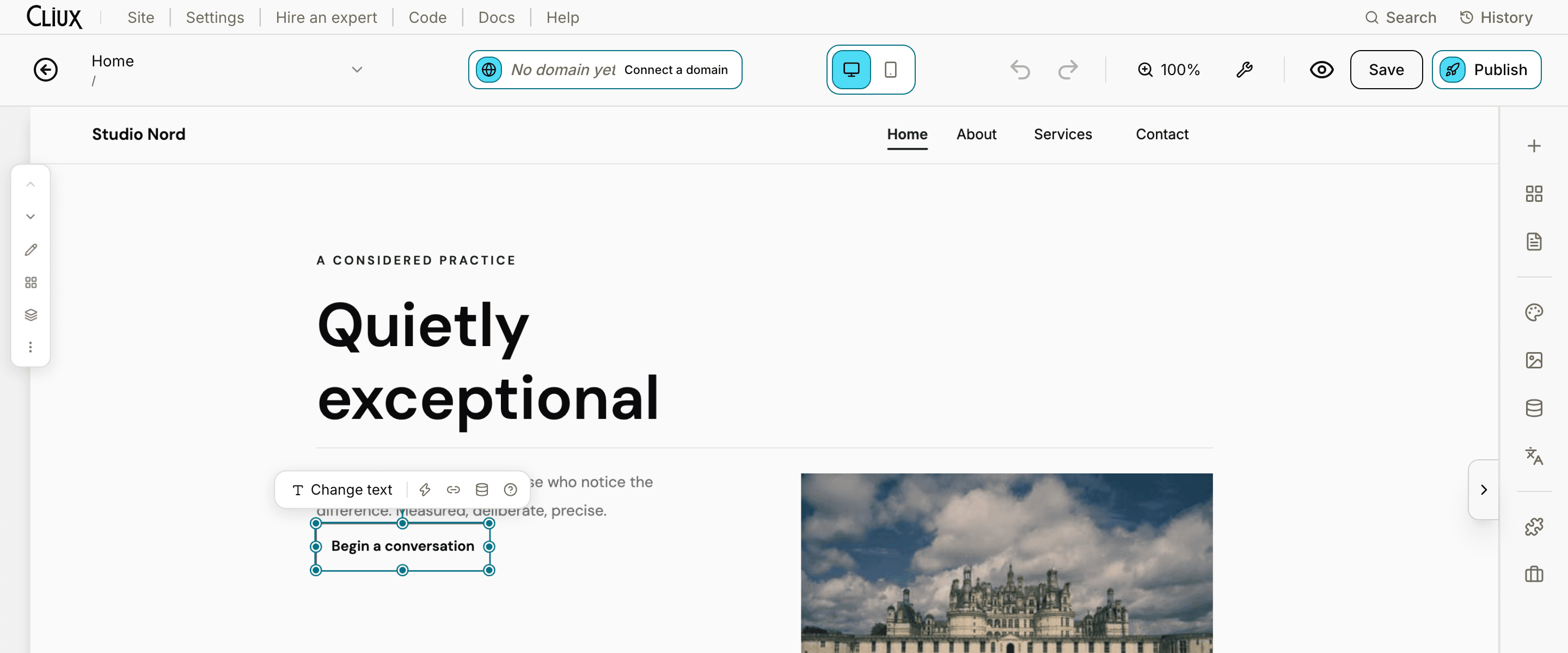
The waitlist
Waitlist signups in one inbox, with spam filtering.
A form on the page collects signups. A popup can open on load, after a delay or on a click, and link visitors to the form. A honeypot and a rate limit filter spam. Submissions arrive in an inbox with the page each one came from and export to CSV; with the form's "Create a contact" setting turned on, each signup is also added as a contact.
Spam filtering
A hidden honeypot field and a rate limit on every form.
Contacts from signups
Turn on the form's "Create a contact" setting and each signup is added to the CRM, with the form's name as its source.
CSV export
Download the submissions inbox as a CSV file.
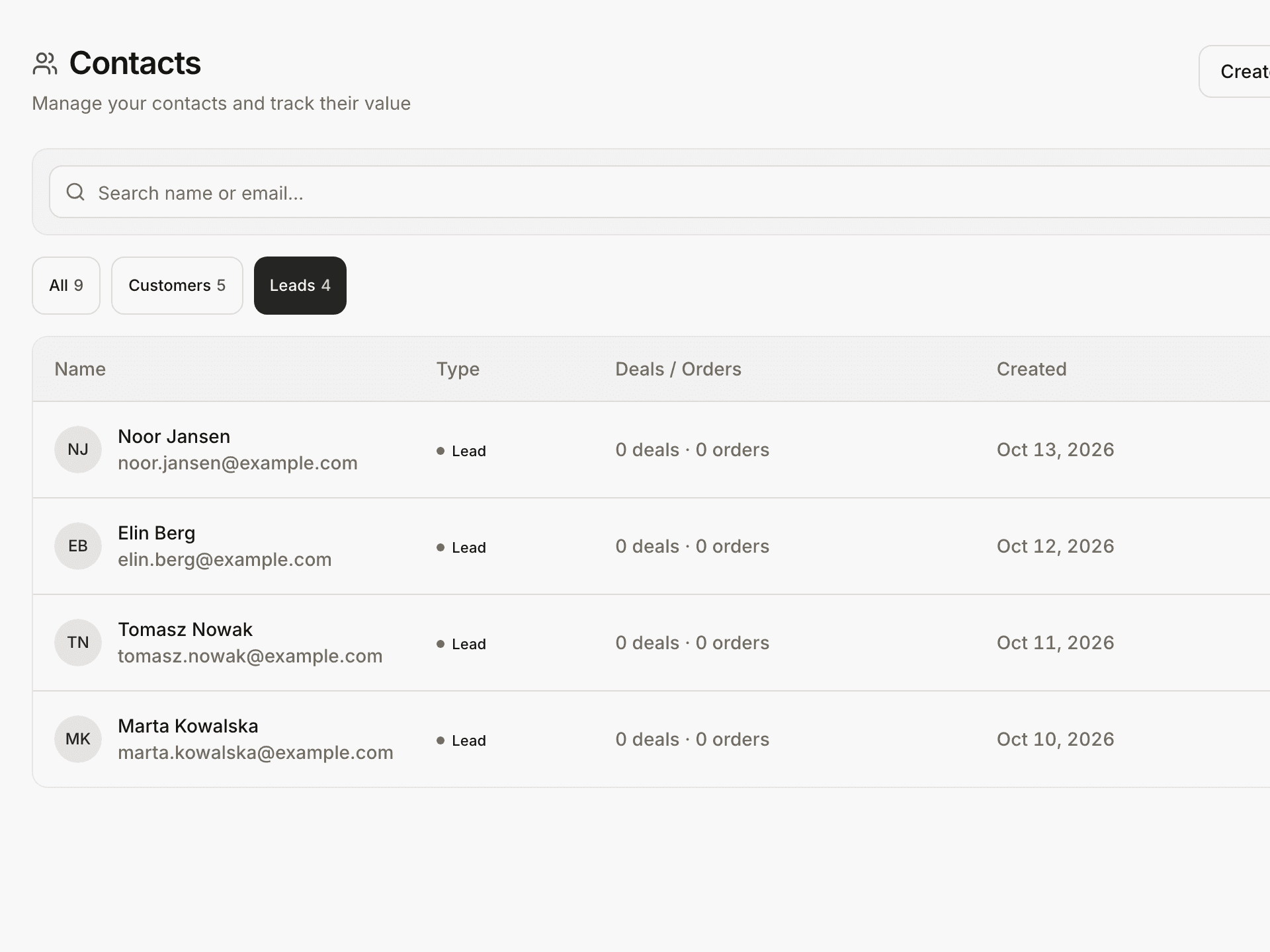
Your code
Your own JavaScript on the published page.
Code mode adds a Monaco code panel to the editor: page code that runs on load and on element events, shared code files, and CMS collections readable from code. This code runs in the visitor's browser; there is no server-side code to deploy. Canvas scripts are a separate tool that changes the design inside the editor.
Page code and events
React to clicks, inputs and page load from a file per page.
CMS collections from code
Read your collections and render them your way.
Embeds and scripts
Paste a widget or a tag where you need it.
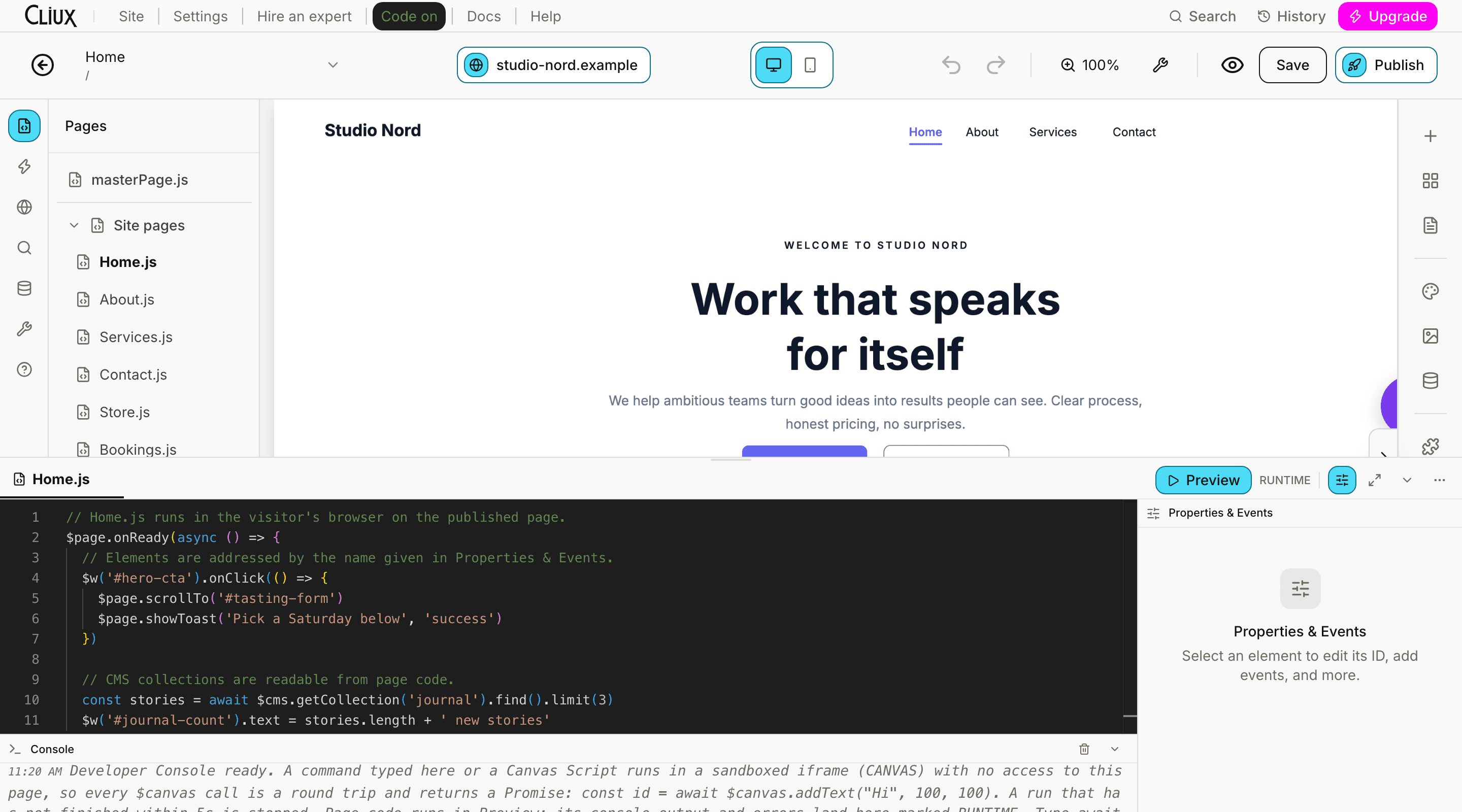
Traffic sources
Where visits come from, measured without cookies.
A first-party script that sets no cookies records where each visit came from (its UTM source or the referring site), the most-viewed pages and the devices visitors use. A real-time page shows how many visitors are on the site now, with a live feed of their latest activity.
Visits by source
Grouped by UTM source or referring site.
A real-time page
Who is on the site now and what they are reading.
Devices and pages
Page views by device type, and the most-viewed pages.
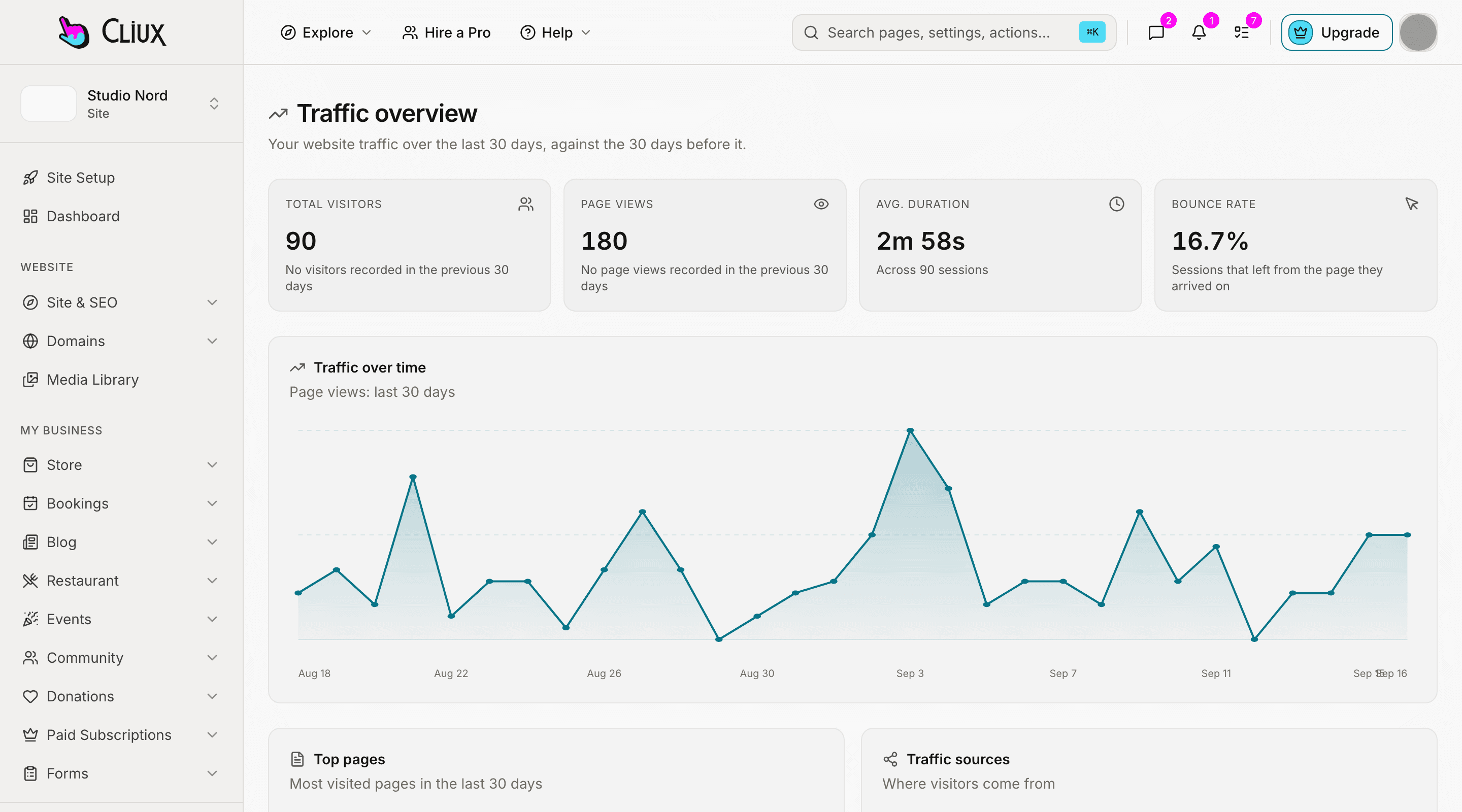
Templates
Three landing page templates, rendered live.
Each preview is a live page, rendered the same way as your published site. Choose one as your starting design and change anything on it.
Capabilities
What you get
Building and previewing are free. Publishing takes a site plan; taking payments starts on Business and recurring payments on Business Plus.
A one-page template
Pick Landing Page when you create the site and it starts with one page in any theme; add sections from the library or design your own.
Your own domain with a certificate
Two DNS records; the certificate is issued for you and renewed.
A blog with a feed
Posts with scheduling, categories, tags and authors; RSS and Article structured data on your domain.
Per-page SEO
Title, description, share image and a hide-from-search switch per page; a sitemap and a robots file on your domain.
Take payments
Connect your payment provider to sell a membership plan or a product from the same site; Cliux adds no fee.
Contacts and deals
Form signups can be added as contacts, and deals move through a pipeline once a conversation starts.
Go deeper
Related features
Frequently asked questions
Have other questions?Use the contact form
No. There is no discount programme for startups. Building and previewing are free; publishing a site on your own domain is $192 a year per site on the Website plan, and selling starts on Business at $348 a year.
Yes. Signups go to a form on the page, and a popup can point visitors to it. Submissions arrive in an inbox that exports to CSV, with the page each one came from; with the form's "Create a contact" setting turned on, each signup is also added as a contact. A form can send one automatic reply; there is no referral tracking and no email sequence.
No. There is no docs engine; build the pages in the editor and post updates on the blog.
Yes. Code mode gives you a code editor for page code and shared code files, which run in the visitor's browser, and for canvas scripts, which change the design in the editor.
No. You can sell membership plans or products on the site; there is no API to meter your own product.
Building and previewing are free; publishing a site on your own domain is $192 a year per site on the Website plan, and selling starts on Business at $348 a year.
Get started
Try Cliux for your launch.
Building and previewing are free. Publishing a site, at its Cliux address or on your own domain, is $192 a year on the Website plan, and selling starts on the Business plan.